
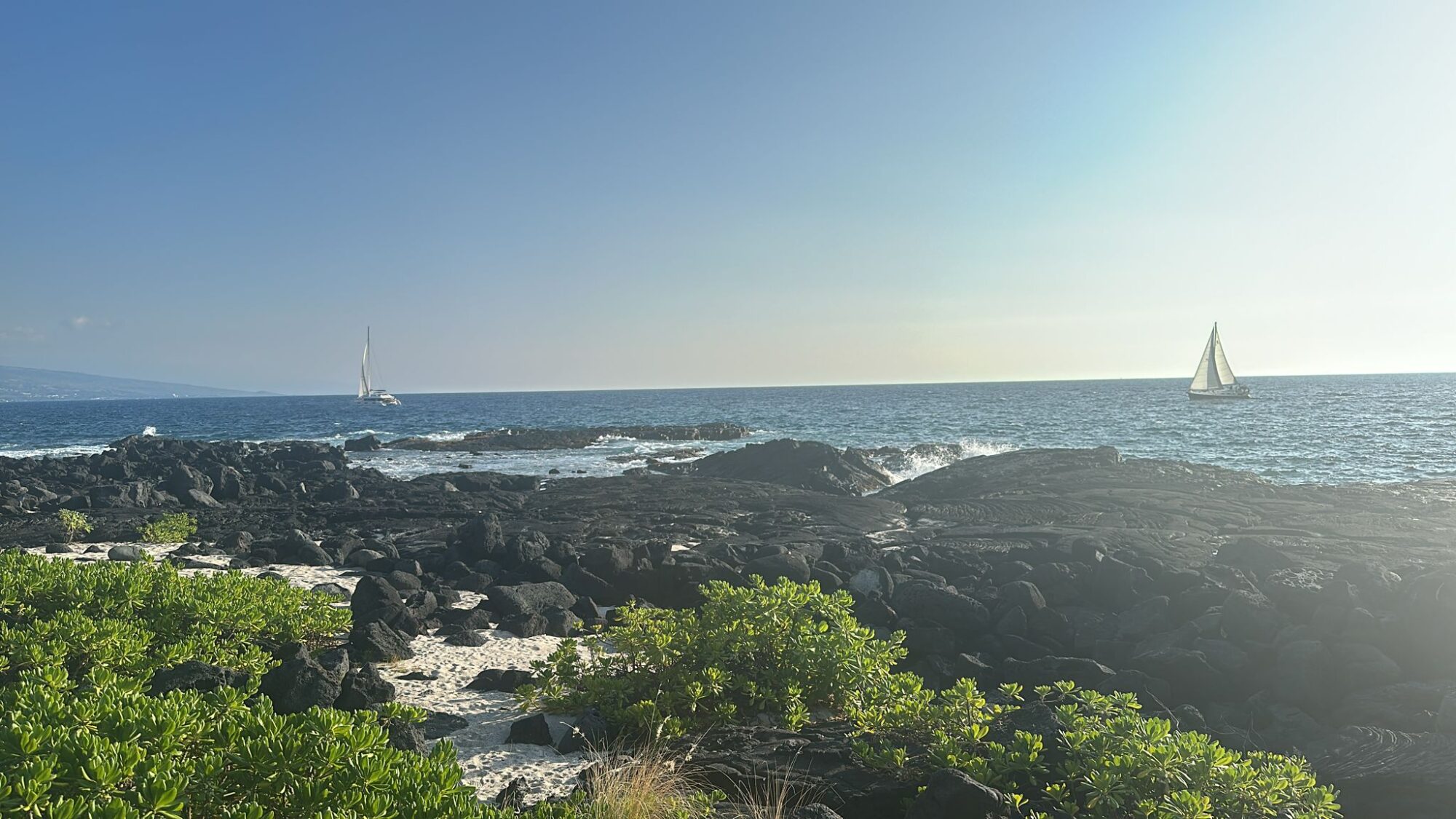
Keiki Beach, also known as Queen’s Bath, is a geographically and culturally significant location in Kona on the island of Hawaiʻi. It embodies a unique combination of natural beauty, geological formations, and cultural relevance, making it a notable point of interest.
The Queen’s Beach area is characterized by its small, sheltered cove and tide pools, which are formed by volcanic activity that shaped much of the Hawaiian Islands’ coastline. The term “Keiki,” meaning “child” in Hawaiian, reflects the beach’s appeal as a relatively calm and shallow location suitable for younger individuals under supervision, although caution is still advised due to unpredictable ocean conditions.
Queen’s Bath refers to a natural tide pool that is continually refreshed by ocean waves. It is surrounded by black lava rock, creating a dramatic and striking visual contrast with the vibrant blue of the Pacific Ocean. The pool provides an enclosed space where visitors can swim and observe marine life, often including small fish and other sea creatures.
These formations occur as a result of lava flows interacting with the ocean, a process that cools and solidifies the molten rock, creating unique and rugged shorelines. The Queen’s Bath at Keiki Beach is one of several such features found across the Hawaiian Islands, with each location showcasing its own distinctive attributes based on local volcanic activity and erosion patterns.
The site of Keiki Beach Queen’s Bath also holds both historical and cultural significance.
In ancient Hawaiian traditions, natural pools such as Queen’s Bath were often used for ceremonial purposes or as places of relaxation and healing for royalty, or aliʻi. These associations contribute to the name “Queen’s Bath”, which implies a sense of exclusivity and reverence.
While there is no definitive evidence that this specific location was utilized in such a manner, the general connection of tide pools and baths with Hawaiian royalty and the Hawaiian lifestyle underscores the cultural heritage interwoven with the natural environment and the principles of natural living in Hawaii.
Despite its idyllic appearance, Queen’s Bath is also associated with certain risks, particularly during high surf conditions or rough seas.
The area can be subject to powerful waves and unexpected surges, which pose hazards even to experienced swimmers. Visitors are often reminded to exercise caution, respect the ocean’s power, and avoid turning their backs to the sea. Over the years, increased awareness of these risks has led to efforts to educate the public about safety measures and the importance of environmental preservation.
Ecologically, Keiki Beach and Queen’s Bath also contribute to the local marine ecosystem.
The tide pools support a variety of marine organisms, offering both Hawaiian residents and tourists the opportunity to observe the species that thrive in these transitional zones between land and sea.
However, the ecosystem is delicate and vulnerable to human impact. Visitors are encouraged to tread lightly, avoid disturbing marine life, and refrain from using sunscreens that contain harmful chemicals, as these can damage coral reefs and other marine habitats.
The popularity of Keiki Beach and Queen’s Bath has grown significantly in recent years, fueled by social media and travel recommendations. While this has brought economic benefits to the local community through increased tourism, it has also raised concerns about overuse and environmental degradation.
Heavy foot traffic, littering, and the potential for accidents highlight the need for sustainable tourism practices. Local authorities and conservation groups have been working to address these issues through education campaigns, improved signage, and, in some cases, restricted access to particularly vulnerable areas.
The experience of visiting Keiki Beach and Queen’s Bath is deeply tied to the broader Hawaiian ethos of natural Hawaiian living in harmony with nature.
The Hawaiian concept of mālama ʻāina, or caring for the land, underscores the reciprocal, even symbiotic relationship between humans and the environment. This perspective encourages both locals and visitors to approach such sites with respect and a sense of stewardship.
By encouraging a better understanding of the cultural, historical, and ecological significance of places like Queen’s Bath, efforts can be made to ensure their preservation for future generations.
Keiki Beach and Queen’s Bath represent more than just a picturesque destination. They serve as a reminder of the interplay between natural processes, cultural heritage, and human responsibility. As such, they provide a space for reflection on the importance of balancing enjoyment of the natural Hawaiian experience with preservation, ensuring that these unique features of the Hawaiian landscape remain accessible and pristine for years to come.