
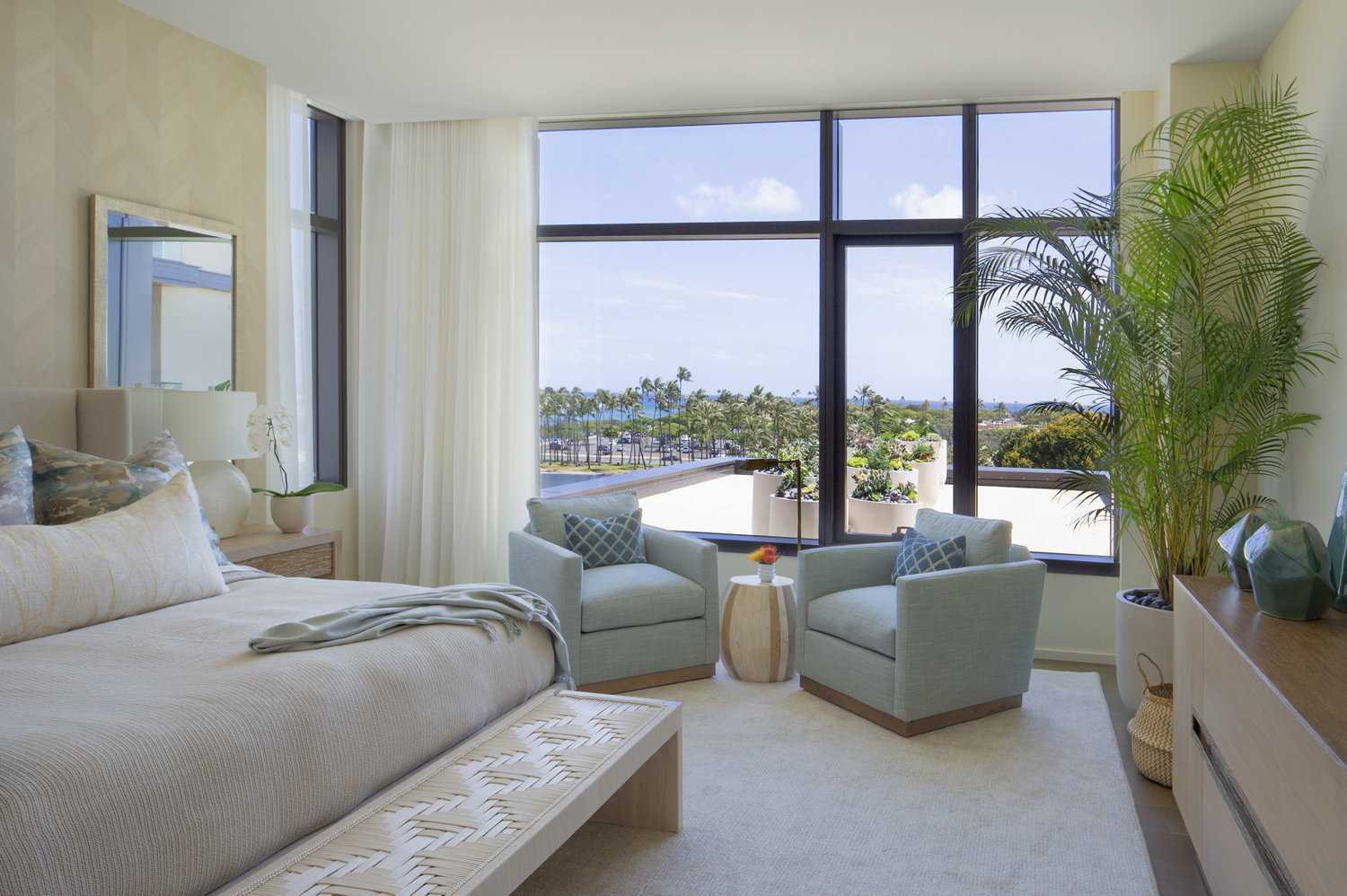
Minimalism in Interior Design as it exists in Hawaiian professional interior design services prioritizes simplicity, functionality, and the intentional use of space, materials, and furnishings to create an environment that is both aesthetically refined and highly functional. Within the context of the proverbial and literal Hawaiian dream home, minimalism is particularly effective in enhancing the natural transition between interior and exterior spaces, taking full advantage of the natural surroundings while maintaining a structured, aesthetically appealing, and purposeful design emanating barefoot elegance and casual luxury.
By employing a restrained color palette, minimalist interiors create an open and airy atmosphere that aligns with the natural light and expansive views characteristic of Hawaiian homes.
Neutral tones, often combined with organic textures such as wood, stone, and woven fibers, allow for a sophisticated aesthetic that remains connected to the surrounding environment. Large windows, sliding glass doors, and open floor plans contribute to the perception of space, ensuring that natural light penetrates deeply into the home and visually expands each area.
The functional aspect of minimalism is further reflected in the careful selection of furniture and décor.
Multifunctional furnishings, integrated storage solutions, and streamlined design elements eliminate unnecessary clutter while maintaining an inviting and comfortable environment. By reducing visual noise, each element within the home serves a purpose, whether it be for practical use or as a focal point that complements the overall design.
In spaces dedicated to socialization and comfortable relaxation, such as living rooms and dining areas, minimalism fosters an open and welcoming setting.
The arrangement of furniture encourages the natural flow of conversation if not existence, with seating positioned to facilitate interactive and personal engagement while maintaining unobstructed pathways that enhance the sense of a natural environmental flow. The absence of excessive ornamentation directs attention toward the surrounding views and architectural details, reinforcing the integration of interior and exterior elements and providing an intimately wholesome and natural environment.
For areas designed for relaxation, such as private bedrooms and lounge spaces, minimalism enhances tranquility through the reduction of extraneous distractions.
Soft, textural contrasts, ambient lighting, and a focus on negative space contribute to an atmosphere of calm and retreat. The strategic use of built-in furniture and concealed storage ensures that these areas remain uncluttered, supporting an environment conducive to rest and introspection.
The natural flow between interior and exterior spaces is essential for creating a Hawaiian dream home, and minimalism serves as a key design approach to achieving this cohesion.
The continuation of materials, such as natural flooring that extends from indoor to outdoor areas, creates a visual and tactile connection between both spaces. The incorporation of transitional elements, such as covered lanais, shaded patios, and open-air courtyards, further reinforces the blending of built and natural environments. The careful curation of landscaping elements and outdoor furnishings further ensures that the exterior remains a functional extension of the home, mirroring the minimalist and natural principles applied to the interior.
By enhancing both aesthetic appeal and functionality, minimalism in professional Hawaiian interior design creates a refined, open, and highly livable space integral to the proverbial nature of the real and literal Hawaiian dream home. The thoughtful balance between social and private spaces, combined with an unobstructed flow between interior and exterior areas, establishes a setting that is both timeless and deeply connected to a natural lifestyle deeply ensconced in individual comfort and luxury.